

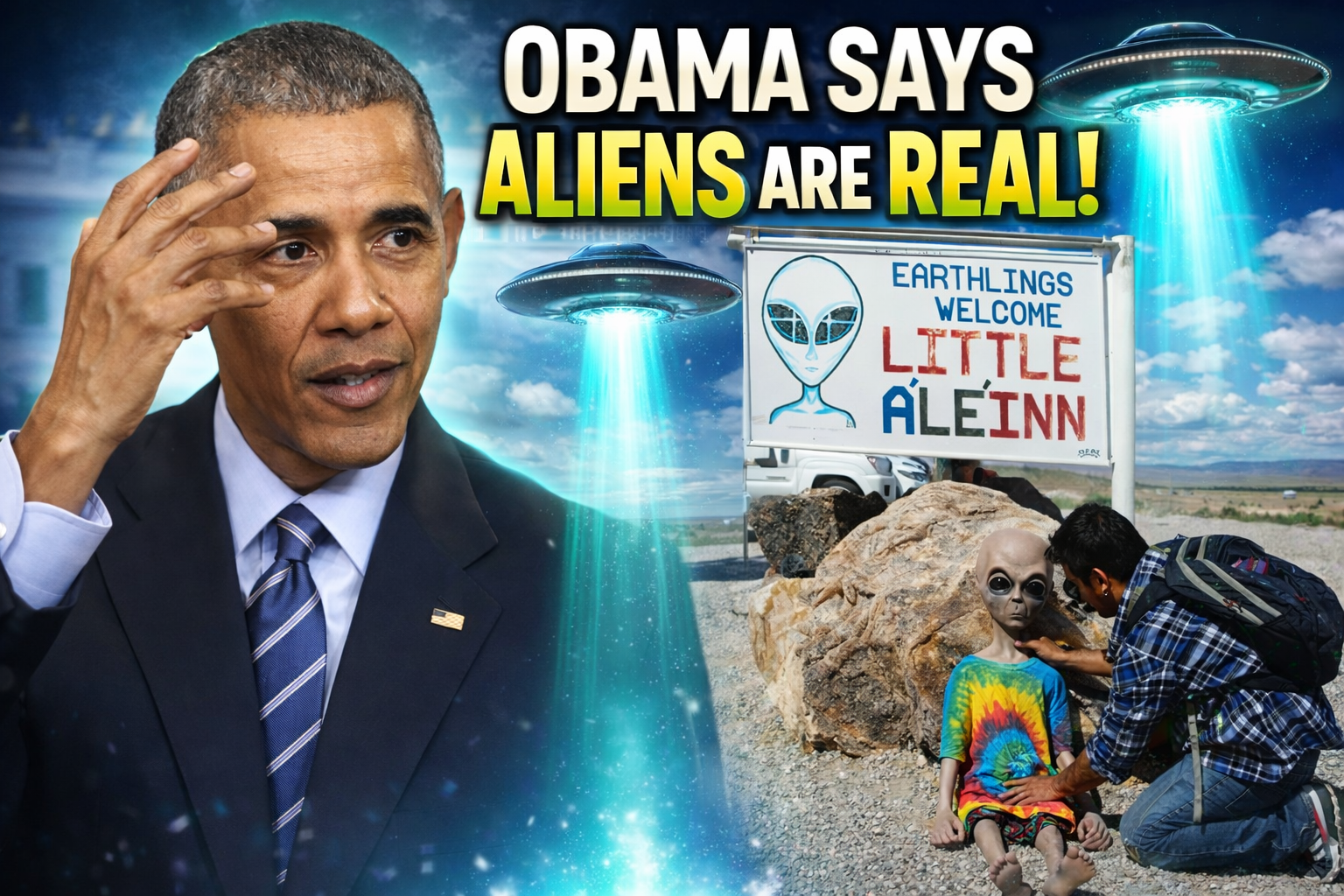
Aliens Are Real? Obama’s Statement Sparks Global Curiosity About Extraterrestrial Life
The idea that we might not be alone in the universe has fascinated humans for centuries. From ancient myths to modern science fiction, aliens have always lived rent-free in our imagination. But things hit differently when a former U.S. president casually says, “Yeah, they’re real.” That’s exactly what happened when Barack Obama made a comment that instantly reignited global curiosity about extraterrestrial life.
So, what did he really mean? Was it a joke, a philosophical statement, or something deeper? Let’s break it all down—no tin foil hats required.
Why the World Is Obsessed With Aliens
Humans are natural explorers. We look at the stars and wonder, Who else is out there? The universe is massive—so massive that the idea of Earth being the only place with life feels almost arrogant.
Aliens represent possibility. They challenge our understanding of life, science, and even religion. And let’s be honest—mystery is exciting. The unknown pulls us in like a cliffhanger at the end of a Netflix episode.
A Brief History of Alien Beliefs
Ancient Civilizations and Sky Gods
Long before telescopes and satellites, ancient civilizations looked to the skies for answers. Egyptian hieroglyphs, Mayan calendars, and Hindu texts often describe beings descending from the heavens. Were these gods, metaphors, or misunderstood visitors? No one knows for sure—but the stories persist.
Modern UFO Sightings
Fast-forward to the 20th century, and the conversation shifts from myths to machines. Strange lights, flying discs, and unexplained encounters start popping up in reports worldwide. The term “UFO” enters popular culture, and curiosity turns into obsession.
Obama’s Comment That Reignited the Debate
The Interview That Went Viral
During an interview with YouTuber Brian Tyler Cohen, Obama was asked the question everyone secretly wants answered: Are aliens real? His response was calm, casual, and shockingly straightforward.
What Obama Actually Said
Obama stated that aliens are “real,” but quickly clarified that he has never seen them and that they are not being hidden at Area 51. His tone wasn’t sensational—it was matter-of-fact. And that’s exactly why it grabbed attention.
Sometimes, it’s not what you say, but how you say it.
Clearing the Area 51 Mystery
Why Area 51 Is So Famous
Area 51 has been the poster child for alien conspiracies for decades. Hidden away in Nevada, this secretive base fueled rumors of crashed UFOs and reverse-engineered alien tech.
Obama’s Take on Area 51
Obama dismissed the idea of aliens being stored there, joking that if such a secret existed, it would be a conspiracy big enough to keep even the president in the dark. Translation? Cool stories—but no solid proof.
What Are UFOs and UAPs?
The Shift From UFO to UAP
The government now prefers the term “Unidentified Aerial Phenomena” (UAP). Why? Because it sounds more scientific and less sci-fi.
Why Governments Changed the Terminology
Words matter. “UFO” comes with cultural baggage. “UAP” keeps the focus on observation and investigation rather than little green men.
The Pentagon and UAP Investigations
The Role of the All-Domain Anomaly Resolution Office
Yes, that’s a real thing. The Pentagon created this office to investigate unexplained sightings across air, sea, space, and even underwater.
What the Reports Reveal So Far
So far, most UAPs turn out to be drones, weather balloons, or sensor glitches. But a small percentage remains unexplained—and that’s where curiosity spikes.
Is There Scientific Proof of Alien Life?
What Science Says Right Now
Short answer? No confirmed proof. Long answer? Plenty of promising hints.
Scientists have discovered thousands of exoplanets, some of them sitting comfortably in the “habitable zone.” That’s like finding apartments with the lights on and wondering if anyone’s home.
Why Evidence Is So Hard to Find
Space is big. Like, mind-meltingly big. Signals weaken, distances are extreme, and life might not look anything like us.
SETI and the Search for Intelligent Life
What Is SETI?
SETI stands for the Search for Extraterrestrial Intelligence. It’s basically humanity listening to the universe and hoping someone says “hello.”
How SETI@Home Changed Everything
Launched in 1999, SETI@Home allowed millions of volunteers to analyze radio signals from space using their home computers. It was science meets teamwork on a global scale.
The Rise and Fall of the Arecibo Observatory
Why Arecibo Was So Important
Located in Puerto Rico, the Arecibo Observatory was one of the most powerful radio telescopes ever built. It played a key role in scanning the skies for unusual signals.
The Collapse That Shocked Scientists
In 2020, structural failures caused the massive telescope to collapse. It marked the end of an era—but not the end of the search.
China’s FAST Telescope and the Next Phase
Why FAST Matters
China’s Five-hundred-meter Aperture Spherical Telescope (FAST) is currently the most sensitive radio telescope on Earth. Bigger dish, better ears.
What Scientists Hope to Discover
Those 100 signals are now being re-examined using FAST. Will they confirm alien intelligence? No promises—but the potential is thrilling.
Why Obama’s Words Matter So Much
Trust, Authority, and Public Perception
When a former president speaks, people listen. Obama’s credibility adds weight to the conversation, even if he’s speaking cautiously.
His comments didn’t confirm aliens visiting Earth—but they validated the question itself.
The Line Between Curiosity and Conspiracy
Healthy Skepticism vs Wild Theories
Curiosity drives science. Conspiracy clouds it. The challenge is staying open-minded without abandoning logic.
Aliens might exist—but that doesn’t mean every blurry video is proof.
Could Humans Ever Meet Aliens?
Scientific Possibilities
Microbial life is the most likely first discovery. Think bacteria, not spaceships.
Ethical and Social Questions
If we do find intelligent life, what then? Do we say hello—or stay quiet? The question isn’t just scientific; it’s deeply human.
What the Future Holds for Alien Research
With better telescopes, AI-driven data analysis, and international cooperation, the search is accelerating. We may not find answers tomorrow—but we’re asking smarter questions every day.
Conclusion
Obama’s statement didn’t confirm alien visitors or secret bases. What it did was something far more powerful—it normalized curiosity. The universe is vast, mysterious, and full of potential. Whether aliens exist or not, the search itself pushes humanity forward.
And maybe that’s the real takeaway: looking up reminds us how small we are—and how much more there is to discover.