

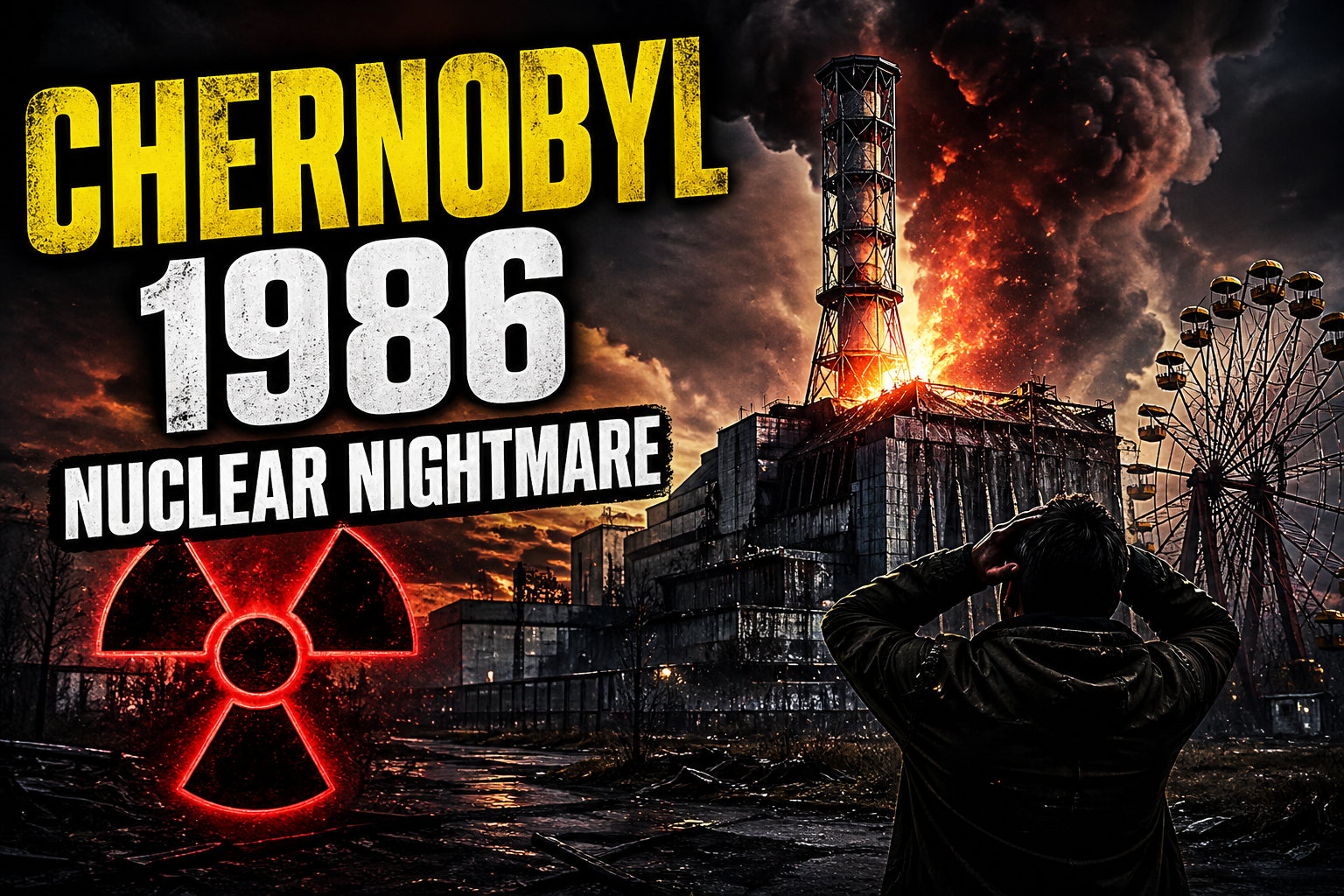
On April 26, 1986, the world witnessed one of the most catastrophic events in human history—Chernobyl Disaster. This was not just a technological failure, but a combination of human error, flawed reactor design, and lack of transparency. The disaster left long-lasting effects on people, the environment, and global nuclear policies
Where is Chernobyl and What Happened?
The Chernobyl Nuclear Power Plant was located in present-day Ukraine, near the city of Pripyat. At the time, it was part of the Soviet Union.During a late-night safety test in Reactor No. 4, a sudden power surge triggered a massive explosion. The reactor core was exposed, releasing large amounts of radioactive material into the atmosphere.
Causes of the Disaster AND Immediate Aftermath
Several critical factors led to the explosion:Flawed RBMK reactor designPoorly conducted safety testOperator errors under pressureLack of proper safety protocolsDelayed government response and secrecyThese combined failures turned a routine test into a global catastrophe.
Following the explosion:A massive fire burned for days, releasing radiationEmergency workers were exposed to lethal dosesThousands of residents were evacuatedA 30-kilometer “Exclusion Zone” was establishedThe disaster spread radioactive fallout across large parts of Europe.

Human and Environmental Impact
Human ImpactDozens died from acute radiation syndromeThousands later developed cancer, especially thyroid cancerLong-term psychological and health effects continue today
Environmental Impact:
Forests and wildlife were severely affectedThe “Red Forest” became one of the most contaminated areas on EarthSoil and water contamination persists decades later
Pripyat: The Ghost CityOnce a thriving city, Pripyat is now abandoned. Schools, amusement parks, and homes remain frozen in time, symbolizing the sudden impact of the disaster.
The Liquidators: Unsung Heroes
Thousands of workers, soldiers, and volunteers—known as “Liquidators”—risked their lives to contain the disaster. They cleared radioactive debris, built containment structures, and prevented further catastrophe.
Global Impact
The Chernobyl Disaster changed the world: Stricter nuclear safety regulations were introduced International cooperation on nuclear safety increased Public perception of nuclear energy shifted dramatically
Chernobyl TodayToday, Chernobyl is a restricted but accessible area for guided tours. Scientists continue to study radiation effects, and surprisingly, wildlife has returned in many areas. However, the region remains hazardous.
Conclusion:
Chernobyl stands as a powerful reminder of the risks associated with nuclear power when safety is compromised. It teaches us the importance of transparency, responsibility, and advanced safety measures in modern technology.