• Sat. Aug 1st, 2026

The Tiny Fish That Cleans Sharks Without Getting Eaten | The Ocean’s Bravest Cleaner Fish

Shark-Cleane

Incredible Cleaner Wrasse, the tiny fish that swims inside sharks' mouths without being eaten. Learn how this amazing marine partnership keeps coral reefs healthy.

TINY FISH WITH THE MOST DANGEROUS JOBS IN THE OCEAN

magine going to work every day knowing that your office is inside a predator’s mouth.One wrong twitch and you become breakfast.Welcome to the life of the ocean’s tiniest workers.On land we have oxpeckers cleaning hippos. In the ocean, we have fish no bigger than your finger swimming into the mouths of sharks, groupers, and eels to do their job.This is Universanet Travel. And today we’re diving deep to explore the creatures with the most dangerous jobs on Earth — and the exact places you can go to see them.
Cleaner-Wrasse

CHAPTER 1: THE CLEANER WRASSE - THE OCEAN’S DENTIST

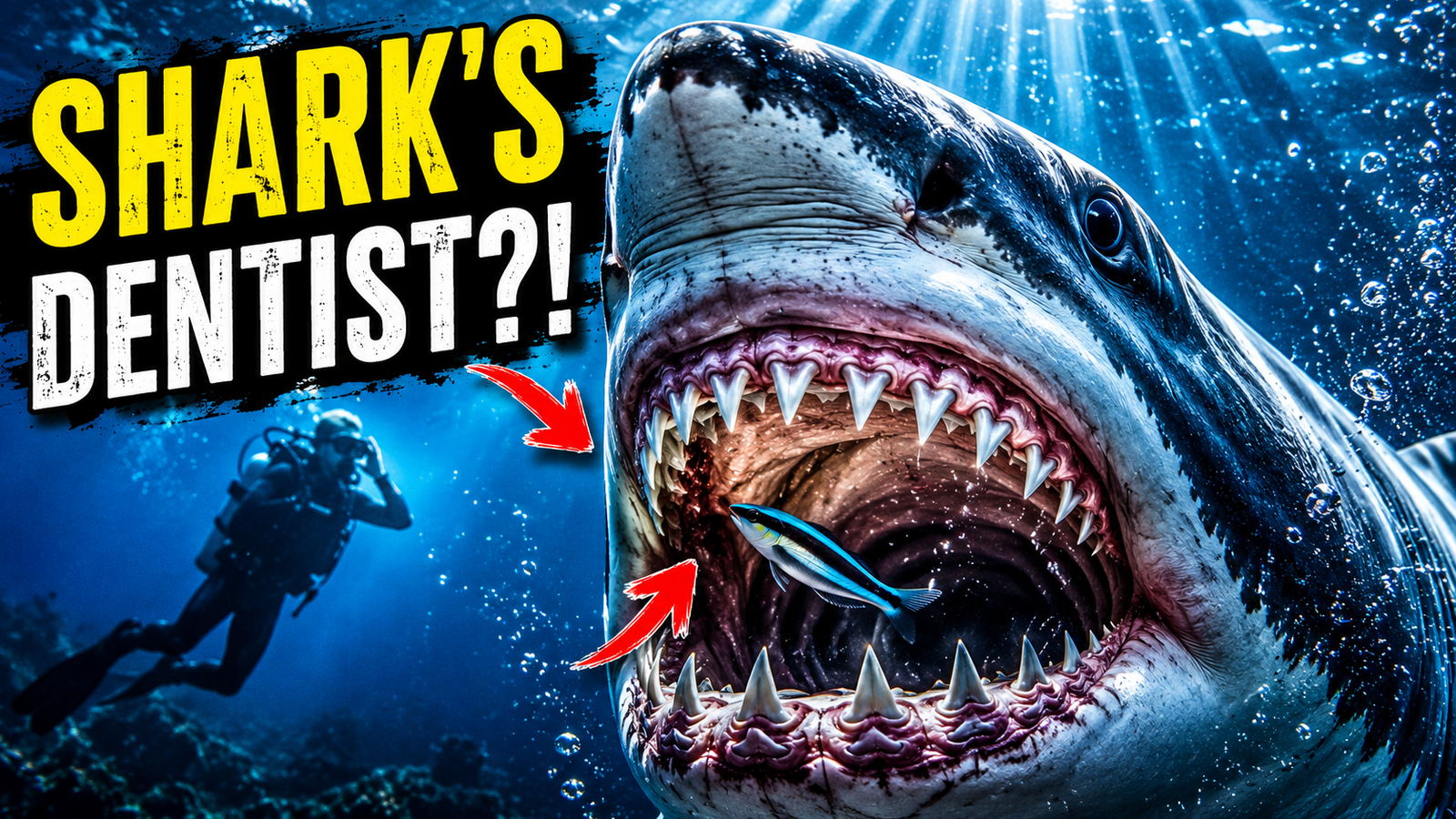
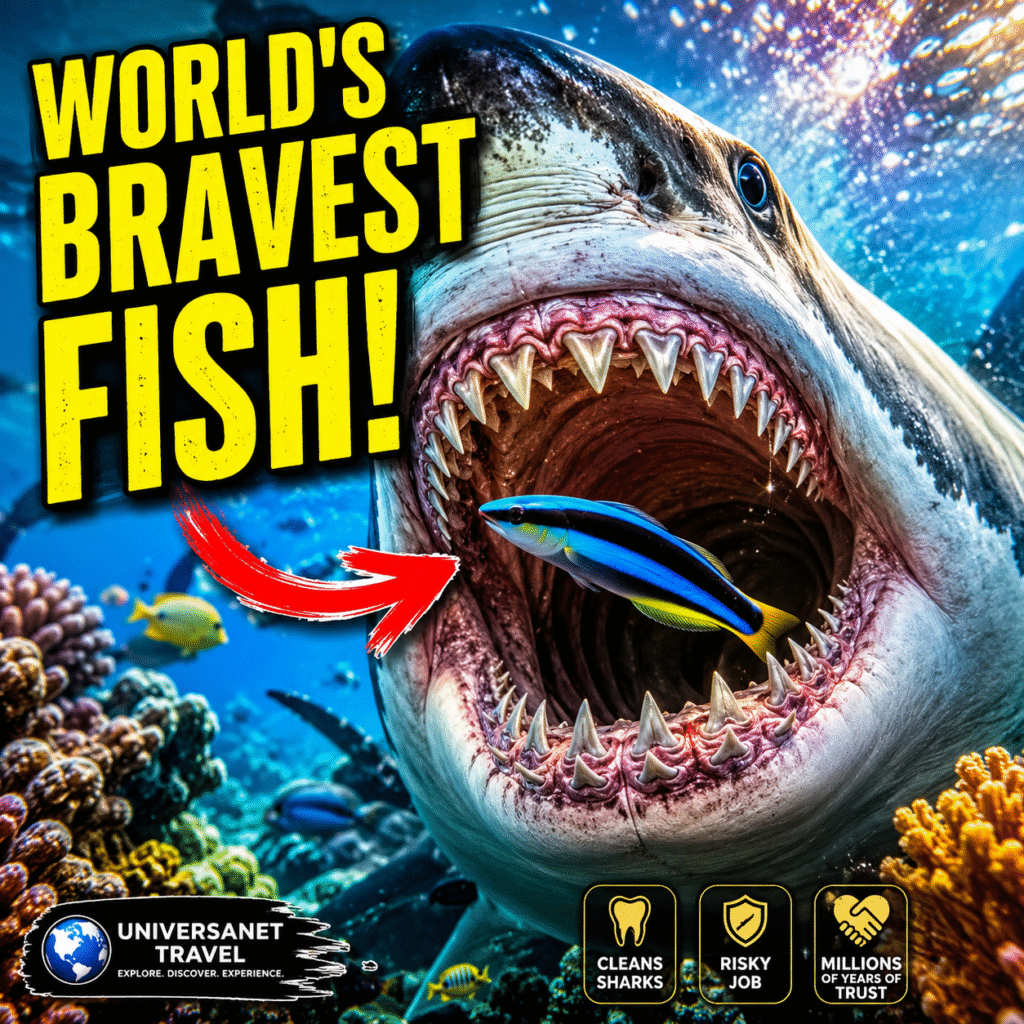
Meet the Bluestreak Cleaner Wrasse. 10cm long. Bright blue stripe. Zero fear.

Its job description is simple: swim to a “cleaning station” on the coral reef, and wait for clients.
Clients include: reef sharks, moray eels, giant groupers, sea turtles, even barracudas.

The wrasse swims right into their gills, into their mouths, and along their teeth. It picks out parasites, dead skin, bacteria, and leftover food.

Why don’t the predators eat them?
Because it’s a deal millions of years old. Scientists call this mutualism.
The big fish get a health check and stay parasite-free. The wrasse gets a meal.
Sharks have been filmed opening their mouths wide and holding still for up to 2 minutes while 5 different wrasses work inside. If a shark broke the rules and ate a cleaner, word would spread. No cleaners would come back. And that shark would get sick.

It’s the most dangerous dental practice in the world.

CHAPTER 2: OTHER TINY FISH WITH DEADLY RESUMES

1. The Clingfish
This tiny suction-cup fish lives INSIDE sea cucumbers. It crawls in through the anus to hide from predators. It eats the cucumber’s waste and in return gets a safe home. Imagine your apartment being inside a living animal that could squeeze you at any moment.

2. The Pearlfish
Related to the clingfish, but even bolder. It lives inside sea cucumbers, starfish, and even sea urchins. During the day it hides. At night it swims out to feed. It’s literally couch-surfing inside other animals.

3. Cleaner Shrimp
Not fish, but they run the biggest “car washes” on the reef. They set up stations and wave their antennae to advertise. Fish line up. Even aggressive predators like lionfish wait their turn. The shrimp climb over them, into their mouths, cleaning every crack.

4. The Goby + Pistol Shrimp Partnership
The pistol shrimp is nearly blind. It digs a burrow. The goby has great eyesight but no home. So they become roommates. The shrimp digs, the goby stands guard. If danger comes, the goby flicks its tail and both dart inside. Teamwork or die.


Cleaner wrasse facts

CHAPTER 3: WHERE TO SEE IT - UNIVERSANET TRAVEL OCEAN GUIDE

You don’t need to be a marine biologist to see this. You just need to go to the right reef.

1. Raja Ampat, Indonesia
The Amazon of the sea. Over 600 coral species. Cleaning stations on almost every reef.
Universanet Travel Tip: Go on a 7-day liveaboard. Dive 4 times a day. Best months: Oct-April.

2. Great Barrier Reef, Australia
The most famous cleaning stations are at “Cod Hole” and “Ribbon Reefs”. You can snorkel and see cleaner wrasses working on giant potato cod.
Universanet Travel Tip: Fly into Cairns. Book a day trip. No dive license needed for snorkeling.

3. Red Sea, Egypt
Affordable, world-class diving. At Ras Mohammed National Park you’ll see sharks lined up to be cleaned.
Universanet Travel Tip: Dahab and Sharm el Sheikh have cheap dive packages.

4. Maldives
Crystal water, manta rays, and reef sharks all using the same cleaning stations. Night dives here are insane — you see the cleaners working under flashlights.
Universanet Travel Tip: Stay at a local island guesthouse to keep costs down.

5. Zanzibar, Tanzania
Perfect if you want to combine this with a safari. Morning: see lions. Afternoon: fly to Zanzibar and see cleaner fish.
Universanet Travel Tip: This is part of our “Safari to Sea” package on Universanet Travel.

Safety + Travel Tips:
– Best time: Dry season, good visibility
– Get at least Open Water dive certified
– Never touch the cleaners or their clients
– Bring an underwater camera. The footage is viral gold
– Want us to book it? Link in description for Universanet Travel ocean packages

Ocean symbiosis

CHAPTER 4: WHY THIS MATTERS

These tiny fish are the doctors of the reef.
When coral reefs are stressed by warming oceans, parasite levels go up. If the cleaners disappear, the whole reef gets sick.

Local fishermen in the Philippines and Indonesia have legends about “the little fish that talks to sharks”. They say if you hurt a cleaner wrasse, the big fish will stop coming to your reef.

It’s proof that in nature, size doesn’t equal importance.
COME SEE IT WITH US
The ocean is full of jobs we would never dare to do.
But these tiny fish do them every day. And they’ve been doing them long before humans showed up.

You can watch it on YouTube. Or you can put on a mask, dive 10 meters down, and watch a 3-meter shark open its mouth for a fish smaller than your thumb.

That’s what Universanet Travel is about. We get you there.

Leave a Reply

Your email address will not be published. Required fields are marked *